Is a Roth IRA Conversion Right for Your Retirement Strategy?
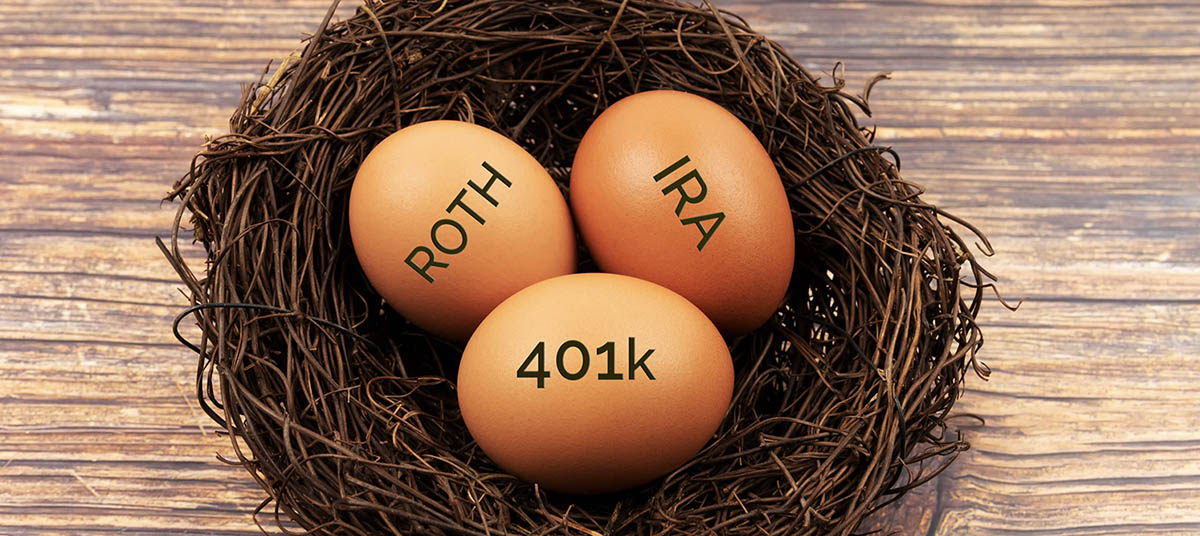
A Roth conversion is a classic example of a tax planning strategy that sounds incredibly straightforward on paper but grows highly complex once you look at the individual details. At Christiansen Accounting, we often see how a single retirement decision can produce drastically different outcomes depending on your age, current income bracket, existing savings, and long-term financial goals.
In the simplest terms, converting to a Roth means taking money currently held in a traditional, tax-deferred retirement account and moving it into a Roth account. In the year you make this move, the converted amount is generally treated as taxable income to the extent it represents funds that have not been taxed yet. This immediate tax bill is the price you pay for a highly valuable long-term benefit: the opportunity for your money to grow completely tax-free and to be withdrawn tax-free in retirement, provided you follow the Roth guidelines.
For many individuals and families here in California, the core question is not whether they are allowed to complete a Roth conversion, but rather whether doing so is a smart move. A variety of interconnected factors dictate the answer, including your current and future tax brackets, your investment timeline, upcoming required minimum distributions (RMDs), and how the transaction might shift other elements on your tax return. A Roth conversion is not a one-size-fits-all strategy; it can be an exceptional financial move for one household and an expensive misstep for another. The objective is never to convert just for the sake of doing it, but to proceed only when it clearly improves your multi-year tax outlook.
Understanding the Mechanics of a Roth Conversion
To evaluate this strategy, it helps to review the foundational differences between traditional and Roth accounts. A traditional IRA operates on tax deferral. This means your contributions might have been tax-deductible when you made them, your investment growth is shielded from annual taxes, and you eventually pay ordinary income tax on every dollar you withdraw in retirement.
A Roth IRA works differently. You fund a Roth with after-tax dollars—meaning you have already paid income tax on that money. In exchange, qualified withdrawals from the account in retirement are entirely tax-free. When you execute a conversion, you are voluntarily shifting assets from the tax-deferred system to the tax-free system. You are choosing to settle your tax liability today rather than leaving that bill for the future.
This fundamental shift in timing is where the real planning occurs. If you expect to find yourself in a higher tax bracket in the future, paying the tax today at a lower rate is highly advantageous. Conversely, if you expect your tax rate to drop significantly in retirement, paying taxes early might not be the best use of your capital. Additionally, because a conversion adds the converted amount directly to your taxable income for the year, it can trigger ripples across your entire return. It can affect phaseouts, tax credits, and deductions that are tied directly to your Adjusted Gross Income (AGI). This is why any sound analysis must look at your complete financial picture, not just the retirement account in isolation.
Navigating the Traditional IRA-to-Roth IRA Pathway
The standard method of executing this strategy is the classic traditional IRA-to-Roth IRA conversion, often referred to as a regular conversion. It seems simple: you instruct your custodian to move the funds, you report the event on your tax return, and you pay the resulting tax. However, the underlying mechanics are highly nuanced.
If your traditional IRA consists entirely of pre-tax money—meaning every dollar you contributed was deducted on a prior year's tax return—then the entire converted amount is treated as taxable income. But complications arise if you have a mix of deductible and nondeductible contributions. You cannot simply point to the after-tax portion of your account and convert only those dollars tax-free.
Instead, the IRS applies a strict pro-rata rule to mixed IRAs. Under these guidelines, your total basis (your after-tax contributions) is spread across all the non-Roth IRAs you own. This means the IRS views all your traditional, SEP, and SIMPLE IRAs as one giant bucket of money when calculating the taxability of a distribution or conversion. You cannot isolate your after-tax dollars for conversion while leaving the pre-tax dollars behind.
This is one of the most widespread misconceptions in retirement planning. Taxpayers frequently assume that because they made nondeductible contributions to an IRA, they can easily convert that specific balance to a Roth without paying taxes. In reality, if you hold other traditional, SEP, or SIMPLE IRAs with pre-tax balances, those accounts will pull a portion of your conversion into the taxable column.
Visualizing the Pro-Rata Rule in Action
To see how these mathematics play out, let us look at a specific scenario. Consider an individual who has a traditional IRA containing both pre-tax and after-tax funds. The taxability of their conversion is not determined by personal preference or which dollars they want to move. It is dictated entirely by the ratio of their total after-tax basis to the total value of all their IRAs.
For instance, let us say this taxpayer made two distinct contributions over the years: one contribution of $4,000 that they successfully deducted, and another contribution of $6,000 that was nondeductible because their income exceeded the deduction limits. This creates a total basis of $6,000.
Now, suppose the total current value of the IRA has grown to $12,000. When calculating the ratio, we look at the original $4,000 of pre-tax contributions relative to the $10,000 of total contributions. This means 40% ($4,000 out of $10,000) represents pre-tax dollars. Applying this proportion to the current $12,000 account value, 40% of the value, which amounts to $4,800, is considered pre-tax assets and would be fully subject to income tax upon conversion. The remaining portion represents the nontaxable return of basis.

Demystifying the "Backdoor" Roth Strategy
The term "backdoor Roth" is a popular planning phrase rather than an official statutory account classification. It describes a two-step transaction: first, a taxpayer makes a nondeductible contribution to a traditional IRA, and second, they promptly convert those funds into a Roth IRA. This strategy is primarily utilized by high-income earners whose earnings exceed the statutory limits for making direct contributions to a Roth IRA.
While the backdoor Roth is a highly useful tool, it is not a magical loophole that guarantees a tax-free transition. As discussed with the pro-rata rule, if you hold other traditional, SEP, or SIMPLE IRAs containing pre-tax funds, a portion of your backdoor conversion will inevitably be taxed. Therefore, the backdoor Roth strategy operates most efficiently and cleanly for individuals who have no other pre-tax IRA assets.
Additionally, the administrative details of this strategy require careful attention. IRS Form 8606 is the critical document used to track your nondeductible basis and calculate exactly how much of your conversion is taxable. If this form is neglected or filled out incorrectly, you risk paying unnecessary taxes or losing track of the basis you need to shield future distributions.
Exploring the Mechanics of the Mega Backdoor Roth
Another common planning phrase is the "mega backdoor Roth." This strategy is a more advanced variation that takes place within an employer-sponsored retirement plan, such as a 401(k), rather than an individual IRA. It involves making substantial after-tax contributions to the employer plan and then executing an in-service distribution or rollover to a Roth IRA or an in-plan Roth conversion. This approach allows for significantly larger annual Roth accumulations than standard IRA contribution limits permit, but it is entirely dependent on the specific design of your employer's plan.
Not all workplace plans are set up to accommodate this strategy. To make it work, the plan must explicitly permit after-tax contributions (which are distinct from pre-tax or traditional Roth contributions) and must also allow for in-service withdrawals or specific distribution structures. Even when a plan does support it, the tax treatment remains bound by pro-rata calculations and plan-specific distribution rules. You cannot simply dictate that you want to move only your after-tax contributions while leaving all associated earnings behind, unless both the plan documents and IRS guidelines specifically permit that isolation.
The IRS has issued guidance detailing how distributions containing both after-tax amounts and taxable earnings can be split between Roth and traditional retirement vehicles. In some instances, this allows for a highly tax-efficient outcome: routing the after-tax portion directly into a Roth account while rolling the taxable pre-tax earnings into a traditional IRA. If your employer-sponsored plan supports this structure, the mega backdoor Roth can serve as an incredibly robust engine for building tax-free wealth.
Core Motivations Behind a Roth Transition
There are several strategic reasons why individuals choose to undergo a Roth conversion, each centered on long-term tax optimization and financial flexibility.
Future Tax-Free Growth: Once assets are safely moved into a Roth environment and the associated rules are met, all future compounding and growth escape federal and state income taxes entirely. Over a multi-decade investment timeline, this tax-free growth can represent an enormous financial advantage.
Tax Bracket Management: Savvy taxpayers often time their conversions to coincide with temporary drops in their income. This might happen during a gap year, a career sabbatical, the early years of retirement before Social Security and pension payments begin, a temporary business slowdown, or a year when they have exceptionally high itemized deductions. By converting in a low-income year, you intentionally recognize the income at a lower tax rate today to avoid paying a higher rate in future years.
Minimizing Future Required Minimum Distributions: Traditional retirement accounts require you to begin taking taxable distributions once you reach a certain age, whether you need the money or not. Roth IRAs, however, do not impose lifetime RMDs on the original account owner. This gives you ultimate control over when and how you draw down your retirement assets.
Estate and Beneficiary Planning: Leaving a Roth account to your heirs is often far more advantageous than leaving a traditional IRA. While beneficiaries are still subject to specific distribution rules, receiving tax-free distributions is a massive benefit, particularly if your children or other heirs are in their peak earning years and high tax brackets when they inherit the assets.

Identifying the Ideal Candidates for a Conversion
In our work at Christiansen Accounting, we find that Roth conversions deliver the greatest value when certain financial conditions align. Generally, a conversion is most beneficial when you:
- Are experiencing a temporary drop in your marginal tax rate,
- Anticipate being in a higher income tax bracket in the future,
- Have a long investment horizon before you need to access the funds,
- Can comfortably pay the resulting tax bill using cash or assets held outside the retirement account,
- Have minimal or no pre-tax IRA assets that would trigger the pro-rata rule, or
- Want to intentionally reduce the size of your future RMD liabilities.
Your age plays a significant role in this mathematical equation. Younger savers often derive the most benefit because their converted assets have decades to compound tax-free, which easily offsets the initial tax hit. Those in their middle years can use conversions strategically to manage their projected tax brackets as their earnings peak. For older individuals, a conversion can still be highly effective, but because the timeline for tax-free compounding to make up for the upfront tax payment is shorter, the analysis must be exceptionally precise.
Scenarios Where a Conversion May Not Make Sense
Conversely, there are many situations where a Roth conversion is far less compelling or even financially detrimental. The strategy is often less attractive if you:
- Are currently in your peak earning years and sitting in a high tax bracket,
- Expect your tax rate to drop significantly during retirement,
- Anticipate needing to spend the converted funds in the near future,
- Must deplete a portion of the retirement account itself to pay the conversion tax bill, or
- Hold substantial pre-tax balances in other traditional IRAs that will trigger high pro-rata taxation.
Additionally, you may be a poor candidate if the added conversion income pushes your current-year earnings past critical thresholds. Because the converted amount is added directly to your taxable income, it can inadvertently reduce or eliminate other tax benefits. This added income can trigger phaseouts of various deductions and credits, making the true, all-in tax cost of the conversion much higher than you initially calculated.
Minimizing the Long-Term Impact of Required Minimum Distributions
The desire to manage or avoid required minimum distributions is a primary motivator for taxpayers executing conversions in the years leading up to retirement. Because traditional IRAs force you to take annual, taxable distributions later in life, they can easily push you into a higher tax bracket and complicate your retirement cash flow. Roth IRAs, by contrast, allow you to leave the money untouched for as long as you live.
However, timing is critical. If you wait until you have already reached RMD age, your flexibility is dramatically reduced. You cannot convert your required minimum distribution itself to a Roth IRA to avoid the tax; you must satisfy your annual RMD obligation first. Because of this rule, Roth conversion planning is generally most powerful and flexible in the years before RMDs begin to dictate your annual income and tax liability.
Enhancing Your Legacy Through Generational Wealth Planning
A successful Roth conversion strategy looks beyond your own lifetime. It is also an investment in the financial well-being of those who will eventually inherit your estate. Leaving a tax-free Roth IRA to a child, grandchild, or trust is a highly efficient way to transfer wealth, particularly compared to leaving a heavily taxed traditional IRA. This is especially true if your beneficiaries are likely to inherit the assets during their own high-earning years, when additional taxable income would carry a steep tax cost.
That said, inherited Roth IRAs are not entirely free from restrictions. Beneficiaries must still follow specific distribution rules, which vary depending on whether the heir is a spouse, a non-spouse individual, or a trust. Because these rules are strict, your conversion strategy must be carefully customized depending on whether you plan to spend down the retirement assets yourself or preserve them as a tax-free legacy for the next generation.
Uncovering the Indirect Tax Consequences of a Conversion
A Roth conversion should never be analyzed in a vacuum. Because the taxable portion of the conversion increases your Adjusted Gross Income, it can create a cascading series of tax side effects across your return. For example, a sudden spike in income from a conversion might:
- Push you into a higher marginal income tax bracket,
- Increase the portion of your Social Security benefits that is subject to federal income tax,
- Phase out or eliminate your eligibility for specific tax deductions and credits,
- Trigger alternative minimum tax (AMT) or other threshold-based taxes, or
- Create unexpected liabilities on both your federal and California state tax returns.
Because of these potential side effects, it is vital to mathematically model the conversion before initiating the transaction. Looking at the future tax-free growth of a Roth is easy, but verifying the true, immediate cost on this year's tax return requires a professional, multi-scenario analysis.
Critical Missteps to Avoid in Roth Planning
The most common error we see is assuming a conversion is tax-free simply because the taxpayer previously made nondeductible contributions. As we have discussed, the IRS does not allow you to cherry-pick your after-tax dollars; the pro-rata rules require you to factor in all pre-tax balances across all non-Roth IRAs. Another frequent mistake is failing to properly file IRS Form 8606, which is the only way to officially document your nondeductible basis and protect yourself from being taxed twice on the same money.
Additionally, many taxpayers overlook workplace options. In some scenarios, utilizing an employer plan that supports after-tax contributions and in-plan conversions can yield a significantly more efficient result than a standard traditional IRA conversion. Finally, there is the mistake of converting too much in a single tax year. Converting a massive lump sum can easily push your income into a much higher bracket, wiping out the tax arbitrage you were trying to achieve.
Developing a Tailored Roth Conversion Strategy for Your Future
Ultimately, a Roth conversion is a highly personalized planning choice, not an automatic win or loss. The individuals who stand to benefit the most are typically those in a lower-income year, who expect their future tax rates to rise, who possess a long time horizon for the funds to grow, and who can pay the tax bill using separate, non-retirement funds. On the other hand, individuals with mixed IRAs, high pre-tax balances, or an immediate need to spend their retirement savings may find the strategy far less beneficial.
The true power of a Roth conversion lies in its long-term flexibility. Done correctly, it can shield your wealth from future tax increases, eliminate the stress of lifetime RMDs, and provide an invaluable, tax-free legacy for your loved ones. However, this strategy is only successful when you evaluate the entire financial landscape: your current and future tax brackets, existing IRA basis, employer plan rules, estate planning goals, and the immediate impact on your annual tax return.
If you are considering a Roth conversion, the fundamental question to ask is not "Am I allowed to do this?" but rather "Will this move genuinely optimize my lifetime tax liability?"
At Christiansen Accounting, our team of seven professionals here in California is ready to help you model these scenarios and build a plan that fits your exact goals. Contact our office today to schedule an in-depth analysis of how a Roth conversion fits into your long-term retirement strategy.
Want tax & accounting tips and insights?
Sign up for our newsletter.