The Quiet Crisis of Financial Fragility: Why Savings Matter More Than Ever
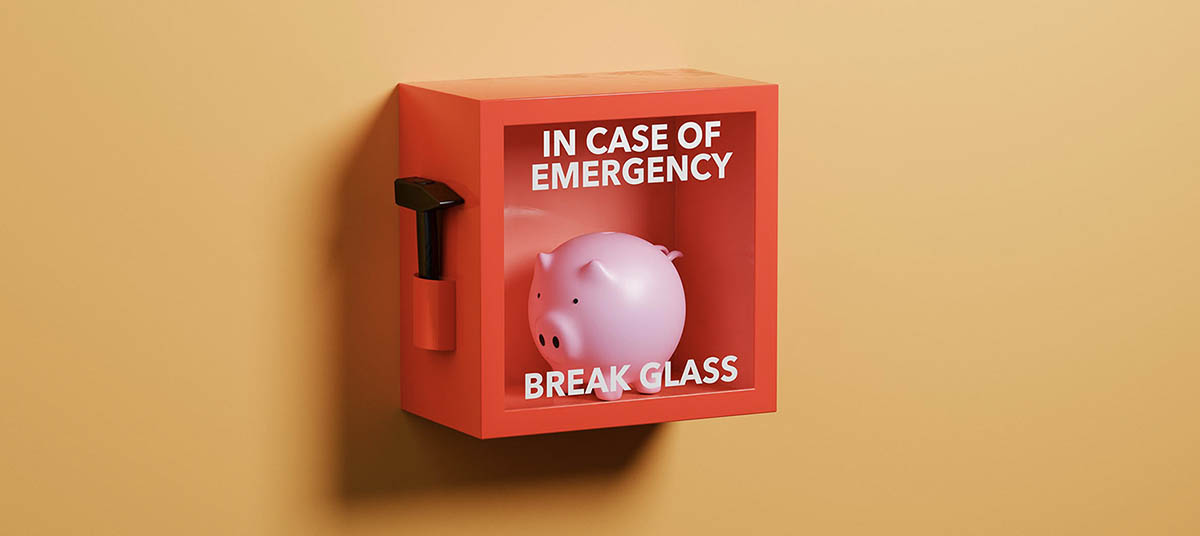
For many Californians, financial stress doesn’t manifest as a sudden crisis. Instead, it’s a quiet, persistent pressure. You are working hard, paying your bills on time, and checking all the boxes of a responsible professional or small business owner. Yet, beneath the surface, there is a growing sense of fragility—a realization that the margin for error has narrowed significantly over the last few years.
This isn’t about a lack of effort; it’s about a shifting economic landscape where an unexpected car repair, a sudden insurance hike, or a few months of increased overhead can quickly push a stable household toward a breaking point. At Christiansen Accounting, we see this often: clients who look successful on paper but feel a deep sense of vulnerability because their liquid reserves haven't kept pace with the rising costs of living in California.
The Great Safety Net Erosion
Recent data from Bankrate highlights a historic shift in how Americans manage their safety nets. For the first time in over a decade, roughly 36% of adults report having more credit card debt than emergency savings. Even more alarming is that nearly 25% of the population has no emergency fund at all. This isn’t a sign of mass irresponsibility; it’s a reflection of how life has become significantly more expensive.
In cities across California, the cost of groceries, utilities, and housing has surged, often outpacing income growth. For many, credit cards have stopped being a convenience and have started acting as a proxy emergency fund. When the cash flow isn't there to cover a major home repair or a medical deductible, the plastic comes out. This shift creates a cycle where households are essentially borrowing their stability at a very high price.
The Credit Card as a Default Emergency Fund
Using credit as a buffer might feel manageable in the short term, but it changes the math of your financial future. With average interest rates now hovering above 21%, carrying a balance is more expensive than it was just a few years ago. When interest consumes a significant portion of your monthly payment, the principal remains stubbornly high, and your actual "breathing room" disappears. This is why we emphasize cash reserves—not just for the math, but for the protection it offers against high-interest debt cycles.

Why "Fine on Paper" Doesn't Feel Fine
Many of the people feeling this anxiety are not reckless spenders. They are professionals who budget, avoid unnecessary luxuries, and work full-time. The pressure they feel is the result of "inflation fatigue" and the cumulative effect of small increases. It’s the subscription creep, the rising childcare costs, and the sudden jump in homeowner’s insurance premiums that quietly erode a family's discretionary income.
For small business owners, this pressure is often doubled. You are navigating rising payroll costs and supply chain fluctuations while trying to maintain your own household’s stability. When every dollar is accounted for before it even hits your bank account, the emotional toll is significant. Financial stress affects your sleep, your decision-making, and your ability to plan for the long term. It keeps you in a reactive state rather than a proactive one.
The Emotional Cost of Hidden Stress
We often treat finance as a purely mathematical exercise, but it is deeply emotional. The feeling of being "one emergency away" from a disaster creates a constant background hum of anxiety. This can lead to decision paralysis or, conversely, impulsive financial choices made out of fear. Recognizing that this stress is a logical response to a difficult environment is the first step toward addressing it. You don't need a massive windfall to start feeling better; you need a system that provides clarity.
Moving From Fragility to Resilience
Building resilience doesn't require a total lifestyle overhaul or a sudden doubling of your income. It is built through small, consistent systems that prioritize visibility. At Christiansen Accounting, our team of seven professionals focuses on helping clients understand exactly where their cash is going. When you have clear visibility into your cash flow, the uncertainty becomes less daunting.
Resilience comes from automating modest savings, reviewing recurring expenses, and planning for those irregular but predictable costs—like tax payments or annual insurance premiums. These habits aren't flashy, but they create a buffer. Even a small emergency fund provides the ability to absorb a shock without turning to a 21% interest rate solution. That buffer is what we call "breathing room."

Visibility as the First Step
You cannot manage what you do not measure. Many people avoid looking closely at their numbers because they fear what they will find. However, the unknown is always scarier than the reality. Once you have an accurate picture of your debt, your spending, and your savings, you can make intentional choices. This clarity is the foundation of financial confidence and the primary tool we use to help our clients navigate uncertain economic periods.
Reclaiming Your Financial Breathing Room
The goal isn't to live in fear of the next emergency, but to be prepared for it. Financial resilience is built gradually, one decision at a time. Whether you are a family trying to stay ahead of rising costs or a small business owner looking to stabilize your cash flow, having a proactive plan is essential. Preparation creates options, and options are the ultimate antidote to stress.
If you feel like your financial margin is shrinking, a professional review can help restore your perspective and identify areas where you can regain control. Contact Corina Christiansen and the team at Christiansen Accounting today to schedule a consultation. Let’s work together to build a stronger, more visible foundation for your financial future.
Want tax & accounting tips and insights?
Sign up for our newsletter.