Understanding the New Tip Deduction: A Guide for California Service Professionals
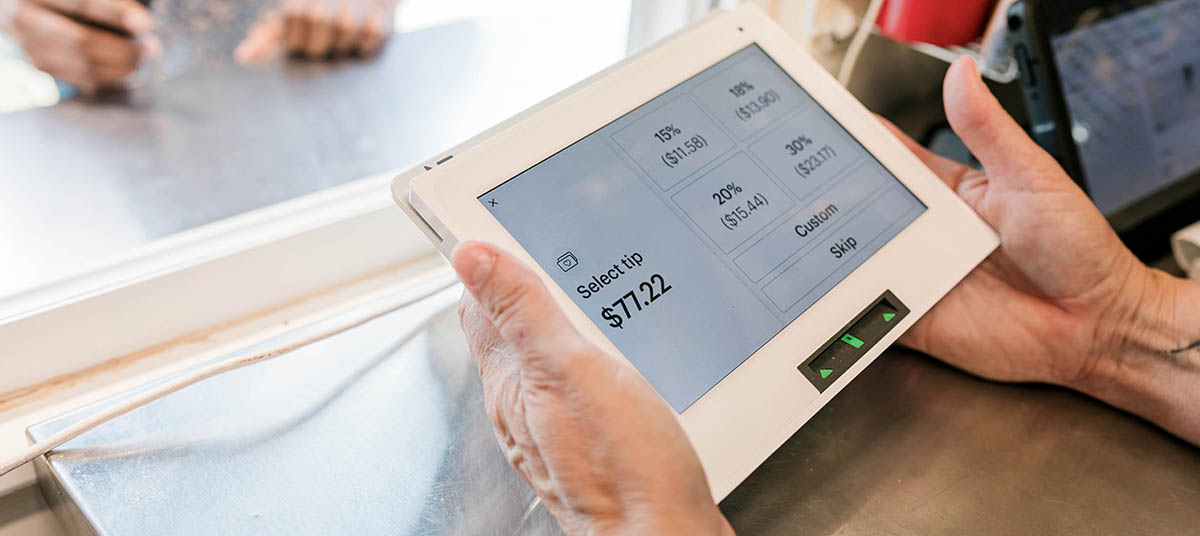
Beginning in tax year 2025, service professionals across California have a new reason to pay closer attention to their gratuity records. A temporary federal tax break for tip earners is now in law, running through 2028. This provision introduces a below-the-line deduction for what the IRS calls qualified tips. At Christiansen Accounting, we want to ensure our clients in the hospitality and gig sectors understand these rules before the 2026 filing season begins, as the transition rules are specific and time-sensitive.
A below-the-line deduction is a specific tax benefit that reduces your taxable income directly, rather than your Adjusted Gross Income (AGI). It functions similarly to the standard deduction, providing a way to lower your final tax liability without affecting your AGI-based eligibility for other credits. To qualify, you must work in an occupation that customarily and regularly received tips as of the end of 2024 and, if married, you must file a joint return to claim the benefit. Additionally, a valid work-eligible Social Security number is required for the claimant.
Defining Qualified Tips and Occupational Eligibility
The IRS has introduced Treasury Tipped Occupation Codes (TTOCs) to standardize who can claim this deduction. While the list includes about 200 illustrative examples—ranging from servers and bartenders to salon professionals—it is not exhaustive. If your role has historically relied on tips, you likely qualify. However, the definition of a qualified tip has specific boundaries. Traditional cash tips, as well as those paid via credit card, debit card, gift cards, and even casino chips or foreign currency, are included. Tips received through voluntary tip pools also count, provided they are properly reported and meet all other criteria.

Exclusions and Technical Limitations
Not every gratuity qualifies for this new deduction. The final regulations explicitly exclude digital assets, such as Bitcoin or stablecoins, from the definition of cash tips. Additionally, mandatory service charges or auto-gratuities are treated as standard wages by the IRS and do not qualify. It is also important to note that tips paid to owner-employees—those with a 5% or greater interest in the business—are ineligible. Finally, tips earned from activities that are illegal under federal law (such as cannabis industry work) cannot be deducted, even if the job appears on the TTOC list. Transition relief is available for Specified Service Trades or Businesses (SSTBs) while the IRS finalizes further guidance.
The Financial Boundaries: Caps and Phaseouts
While the deduction is a welcome relief, it is not unlimited. The maximum annual deduction is capped at $25,000 per taxpayer, regardless of whether you file as single or married filing jointly. Furthermore, higher-income earners will see this benefit phased out based on their Modified Adjusted Gross Income (MAGI). The deduction is reduced by $100 for every $1,000 (or fraction thereof) that your MAGI exceeds $150,000 for single filers or $300,000 for joint filers.
For example, a single filer in California with a MAGI of $160,500 faces a phaseout because they exceed the threshold by $10,500. Because the IRS rounds up fractional thousands, this results in 11 units of $1,000. Their potential $25,000 deduction would be reduced by $1,100 ($100 x 11), leaving them with a maximum deduction of $23,900. Understanding these thresholds is essential for year-end tax planning, especially for high-earning service professionals in major metropolitan areas.
Strict Reporting Standards and the 2025 Transition
One of the most significant changes involves how tips must be reported to qualify. For the 2025 tax year, the IRS is providing a transition year of relief. During this period, self-employed individuals and non-employee payees can rely on their own documentation, such as daily tip logs and receipts, to substantiate their claims. Employers are not required to update 2025 W-2s with the new tip reporting fields yet, as the IRS has issued penalty relief for this initial year.

However, starting in 2026, the rules tighten. To be eligible for the deduction, tips must generally appear on an information statement like a W-2 (Box 12, Code TP) or a 1099. Cash tips that are not reported to an employer and do not appear on these statements will generally no longer qualify for the deduction, even though they remain taxable income. For employees, self-reporting via IRS Form 4137 remains a valid way to ensure those tips count toward the deduction if they are otherwise eligible.
Guidance for California’s Gig Workers and Self-Employed
For independent contractors and gig workers, the deduction is limited to the lesser of $25,000 or the net income of the business that produced the tips. Net income is calculated on Schedule C minus specific above-the-line deductions, such as the deductible portion of self-employment tax. If a freelancer's 2026 Schedule C shows $20,000 in net income and they have $1,413 in deductible self-employment tax, their tip deduction cannot exceed $18,587. Crucially, beginning in 2026, if these tips are not documented on a 1099-NEC or 1099-K, the deduction will be denied entirely for self-employed taxpayers.
Optimizing Your Tip Documentation Strategy
The new tip deduction offers a substantial opportunity for tax savings, but the recordkeeping requirements are unforgiving. With the 2025 transition period already here, now is the time to refine how you track your daily gratuities and ensure your employer or payment platforms are prepared for the 2026 reporting changes. Staying ahead of these regulations can prevent a significant tax surprise and ensure you keep more of your hard-earned income.
If you are unsure if your occupation qualifies or need help calculating your specific deduction limits, Christiansen Accounting is here to guide you. We specialize in helping California’s service and small business community navigate complex federal tax regulations. Reach out to our team today to schedule a tax planning session or for assistance in organizing your 2025 records.
Advanced Compliance: A Closer Look at the TTOC Framework
The IRS introduced the Treasury Tipped Occupation Codes (TTOCs) to provide a structured method for identifying which service roles are eligible for this temporary deduction. While the initial guidance provides a list of nearly 200 occupations, it is essential for California workers to understand the underlying criteria of the customarily and regularly standard. This standard applies to any profession where receiving gratuities was a recognized and established practice as of December 31, 2024. If your specific job title is not explicitly listed in the Treasury’s illustrative examples, eligibility is determined by the historical nature of the position within the industry.
For those in the California service sector working in unconventional roles—such as specialized event coordinators or high-end concierge services—the burden of proof remains on the taxpayer to demonstrate that tipping is a standard industry practice. Documentation from employment agreements, industry-wide labor statistics, or local union guidelines can serve as supplemental evidence if the IRS challenges the use of a specific TTOC on a W-2 or 1099. At Christiansen Accounting, we recommend that our clients in these niche categories maintain a copy of the Treasury’s official list alongside their personal employment records to substantiate their claim during the transition years.
Navigating the SSTB Exclusions
One of the more complex areas of the final regulations involves the exclusion of Specified Service Trades or Businesses (SSTBs). Generally, the IRS excludes professions in health, law, accounting, and consulting from the tip deduction, as these roles are often governed by different compensation structures and the Qualified Business Income (QBI) rules under Section 199A. However, the IRS has recognized that the lines can blur, especially in multi-service environments like medical spas or legal consulting firms that may have support staff in tipped roles. To address this, transition relief is currently in place. An employee will not be treated as having received tips in an SSTB if their occupation customarily received tips on or before the 2024 cutoff. This relief is vital for support staff in professional environments who might otherwise be disqualified by the primary nature of the business.
Management Participation and the Tip Pool Nuance
Under federal and state labor laws, the rules regarding who can participate in a tip pool are notoriously strict. The final regulations for the tips deduction clarify that managers and supervisors can only qualify for the deduction on tips they receive directly for services they personally performed. For instance, if a restaurant manager in a busy California bistro steps in to wait tables during a peak shift and is handed a cash tip directly by a customer, that tip is considered qualified. However, if that same manager receives a share of a mandatory tip pool, those funds are generally excluded from the deduction eligibility, even if they are reported as taxable income.
This distinction requires meticulous record-keeping by the employer. Beginning in 2026, when payers must separately report tips using the TP code in Box 12 of the W-2, businesses must have systems in place to distinguish between direct service tips and pooled distributions for management personnel. For the employee, this means verifying that their W-2 accurately reflects these two categories of income. Discrepancies here can lead to a mismatch during IRS automated processing, potentially triggering an inquiry or a partial disallowance of the claimed deduction.

Deep Dive into the Net Income Limitation for the Self-Employed
For independent contractors and gig economy workers, the deduction is not simply a flat amount based on the tips received; it is subject to a net income ceiling. This is where many freelancers may find their deduction unexpectedly limited. The deduction is capped at the lesser of $25,000 or the net income of the business activity that generated the tips. To calculate this ceiling, you start with the gross receipts on your Schedule C, subtract all allowable business expenses, and then further subtract specific above-the-line deductions. These include the deductible portion of your self-employment tax, contributions to simplified employee pensions (SEPs) or other qualified retirement plans, and the self-employed health insurance deduction.
Consider a freelance delivery driver in California who earns $15,000 in tips through a digital platform. If their business expenses for vehicle maintenance, fuel, and insurance reduce their net profit to $12,000, and their deductible self-employment tax is $848, their maximum allowable tip deduction is $11,152 ($12,000 minus $848). Even if their total tips were much higher, the deduction cannot be used to create or increase a business loss. This requires a strategic approach to expense management, as over-accelerating deductions for equipment or vehicle depreciation could inadvertently lower the ceiling for your tip deduction, resulting in a lower overall tax benefit.
The Critical Shift to Third-Party Reporting in 2026
The transition from 2025 to 2026 represents a major shift in tax compliance. While 2025 allows for a good faith effort using personal logs, the 2026 tax year introduces a hard requirement for third-party substantiation. If you are a gig worker or an independent contractor, you must ensure that the platforms you use are updated to report tips separately on Form 1099-NEC or 1099-K. The IRS has made it clear that without these forms showing the specific TTOC and the tip amount, the deduction will be denied during the processing of the return. This represents a significant change for workers who have historically relied on their own records to track gratuities.
For employees, the introduction of Code TP in Box 12 and the specific TTOC in Box 14b of the W-2 will be the primary mechanism for claiming the benefit. If your employer fails to include these codes, you may need to file IRS Form 4137 to report the tips manually. However, the IRS will likely subject these manual entries to higher scrutiny compared to those substantiated by an employer’s information return. Maintaining a digital backup of your daily tip logs, integrated with your bank statements or payroll stubs, remains the gold standard for audit protection during this four-year window.
Strategic Record-Keeping for Audit Protection
Given the temporary nature of this deduction, the IRS is expected to monitor claims closely for signs of misclassification or over-reporting. To protect yourself, especially in high-volume environments, we recommend a three-tier approach to documentation. First, maintain a daily log that records the date, the amount of cash tips, and the amount of credit card tips. Second, keep copies of all weekly or bi-weekly pay stubs that show your reported tips versus your hourly wages. Third, keep a record of your job description or any employment contract that confirms your role falls under the customarily and regularly tipped standard.
By treating your tip income with the same level of professional rigor as a small business owner treats their general ledger, you can maximize your deduction while minimizing the stress of a potential IRS audit. Our team at Christiansen Accounting is prepared to assist you in reviewing these records and ensuring that your 2026 estimates reflect these complex net income limits and phaseout rules. Proactive planning is the only way to ensure that this temporary tax break translates into real, lasting financial savings for your household.
Want tax & accounting tips and insights?
Sign up for our newsletter.