Navigating the New Tip Deduction: A Guide to the Final Regulations (2025-2028)
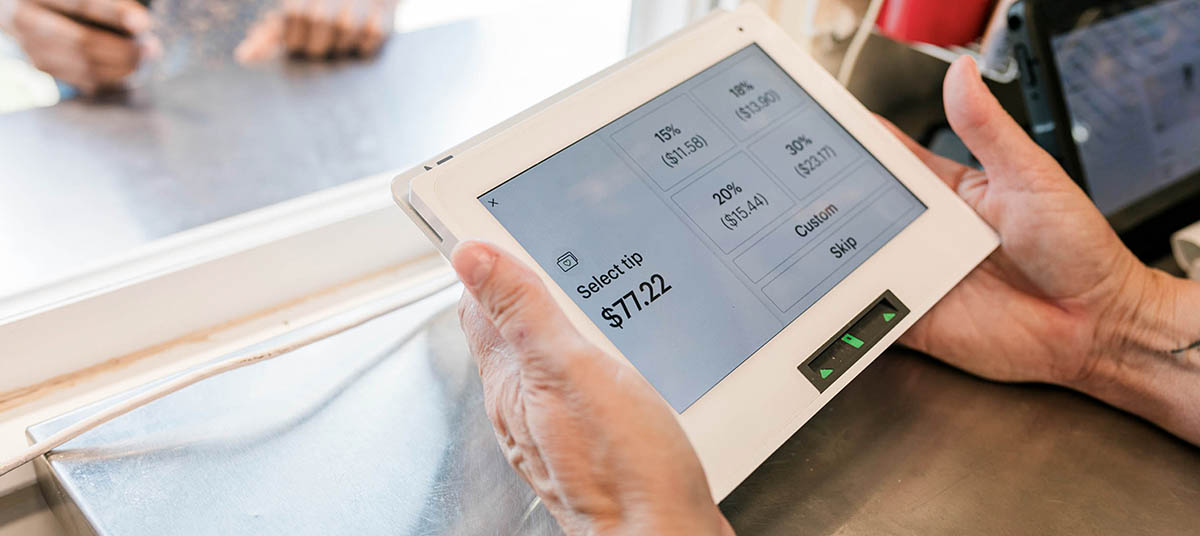
A significant, temporary federal tax break for tip earners has arrived, effective for tax years beginning in 2025 and sunsetting after 2028. This new legislation introduces a below-the-line deduction for ‐qualified tips,‐ offering a unique opportunity for hospitality workers, stylists, and gig workers to keep more of what they earn. However, the benefit is governed by specific eligibility rules, reporting mandates, and income limits that require careful navigation.
For service-based business owners and subcontractors across Montana, from Billings to the surrounding regions, this change impacts how you manage your ‐three-legged stool‐ of business stability: accurate bookkeeping, optimized taxes, and timely payroll. Understanding these rules is essential for maintaining a solid financial foundation and making confident decisions as we approach the 2025 tax year.
Understanding the ‐Below-the-Line‐ Benefit
In tax terminology, a ‐below-the-line‐ deduction reduces your taxable income—and ultimately your tax liability—without lowering your Adjusted Gross Income (AGI). Unlike ‐above-the-line‐ adjustments that impact AGI-based credit eligibility, this tip deduction is available regardless of whether you choose the standard deduction or itemize your deductions on Schedule A. It is a targeted incentive designed to provide direct relief to those in customarily tipped industries.
Who Qualifies for the Tip Deduction?
To claim this deduction, you must meet several criteria defined by the IRS. First, you must be in an occupation that ‐customarily and regularly‐ received tips as of December 31, 2024. The IRS has released Treasury Tipped Occupation Codes (TTOCs) featuring approximately 200 illustrative job examples to help taxpayers identify eligible roles.
- Qualified Tips: You must receive tips that meet the technical definition of ‐qualified tips‐ (detailed below).
- Filing Status: Married taxpayers must file a joint return to claim the deduction.
- Valid SSN: Taxpayers must have a work-eligible Social Security number. The specific requirements for spouses depend on whether one or both individuals earn tipped income.
Identifying ‐Qualified Tips‐ and Exclusions
Qualified tips primarily consist of cash tips received in eligible occupations. However, the final regulations provide a broad definition of ‐cash,‐ including electronic payments, checks, debit and credit card tips, gift cards, and even casino chips or foreign currency. If you participate in a tip pool, those amounts qualify as long as the pool is voluntary and properly reported.

What is Excluded?
The IRS has been clear about what does not count. Digital assets, such as Bitcoin or stablecoins, are specifically excluded from the definition of ‐cash tips.‐ Furthermore, mandatory service charges or auto-gratuities imposed by an establishment are treated as standard wages and are ineligible for the deduction. Tips paid to owner-employees (generally those with 5% or more ownership) or tips earned in activities considered illegal under federal law—such as the cannabis industry—are also excluded, even if the job appears on the TTOC list.
The $25,000 Annual Cap and Phaseouts
The deduction is not unlimited. There is a strict annual cap of $25,000 per taxpayer, regardless of your filing status. Additionally, high earners may see this benefit reduced or eliminated through a Modified Adjusted Gross Income (MAGI) phaseout. The deduction is reduced by $100 for every $1,000 (or fraction thereof) that your MAGI exceeds $150,000 for single filers or $300,000 for joint filers.
Phaseout Example: Consider a single filer with a MAGI of $160,500. Their income exceeds the $150,000 threshold by $10,500. Because the IRS rounds up fractional thousands, this results in 11 increments of $1,000. The reduction is $1,100 ($100 x 11). If they were otherwise eligible for the full $25,000, their actual deduction would be $23,900.
Guidance for Self-Employed and Gig Workers
Many of our clients in Billings operate as subcontractors or freelancers. If you are self-employed in a tipped occupation, you are eligible, but the deduction is limited to the lesser of $25,000 or your net business income (calculated on Schedule C) after accounting for deductible self-employment tax, health insurance, and retirement contributions. Notably, this deduction is claimed on Form 1040 Schedule 1-A and cannot be used to create or increase a business loss.

Crucial Reporting Changes for 2025 and 2026
The transition into this new system involves two phases. For the 2025 tax year, the IRS is providing administrative relief. Employers are not required to update W-2s immediately, and self-employed individuals can rely on their own daily logs and receipts to substantiate their tips. However, starting in 2026, the rules tighten significantly. To be eligible for the deduction, tip amounts must generally appear on official information statements like W-2s (using Box 12, code TP and Box 14b for the TTOC) or 1099-NEC/MISC/K forms. Tips that are not reported by a third-party payer will generally lose eligibility for the deduction in 2026, even if they remain taxable income.
Strengthening Your Business Foundation
This new deduction offers a meaningful path to tax optimization, but the rigorous recordkeeping requirements mean that the ‐three-legged stool‐ of your business must be sturdier than ever. Whether you are a small business owner managing tipped employees or a freelancer navigating these new codes, simplicity and honesty in your reporting are your best defenses against IRS scrutiny. We recommend reviewing your current tip-tracking systems now to ensure you are prepared for the 2026 reporting shift. If you need assistance determining your TTOC code or calculating your potential phaseout, contact our office to schedule a tax planning consultation.
Want tax & accounting tips and insights?
Sign up for our newsletter.