Understanding the Federal Disaster Tax Relief Certainty Act

Natural disasters bring profound disruption to lives, homes, and businesses. When a major event damages personal-use property, navigating the subsequent financial recovery is rarely straightforward. Families often receive insurance payouts, government assistance, or settlement proceeds while trying to account for their losses. Understanding how federal tax rules apply to these transactions is essential to securing the relief you are legally owed.
The passage of the Doug LaMalfa Federal Disaster Tax Relief Certainty Act, signed into law on September 11, 2026, marks a significant shift in how the tax code handles these situations. This legislation targets two primary areas: establishing standardized rules for personal casualty losses arising from federally declared major disasters, and excluding qualified wildfire relief payments from an individual’s gross income. By embedding these provisions directly into the Internal Revenue Code, Congress aims to offer long-term clarity, reducing the historic reliance on temporary, retroactive tax packages passed after specific disasters.
Specialized Tax Treatment for Qualified Disaster Losses
Under this updated framework, taxpayers who experience a qualified net disaster loss may become eligible for enhanced tax relief. Generally, a net disaster loss occurs when your qualified disaster-related personal casualty losses exceed your personal casualty gains, after accounting for any required gain offsets under standard casualty-loss regulations.
A personal casualty loss can stem from severe damage to or the complete destruction of personal property, such as your primary residence, vehicles, household furniture, or personal clothing. However, not every loss qualifies for these enhanced rules. To meet the statutory criteria, the loss must arise within a qualified disaster area, occur on or after the first day of the official incident period, and be directly attributable to the declared disaster event.
Defining a Qualified Disaster Area
Under the Act, a qualified disaster area is defined as any region where the President has declared a major disaster under the Robert T. Stafford Disaster Relief and Emergency Assistance Act. Furthermore, the incident period for the disaster must begin on or after December 28, 2019, and before January 1, 2027. This incident period refers to the specific timeframe designated by the Federal Emergency Management Agency (FEMA) during which the disaster occurred.
Consequently, taxpayers must establish a clear, documented connection between their losses and a specific federal disaster declaration. Simply residing in a state or county with a disaster designation is not sufficient; the damaged property must be physically located in the declared zone, and the loss must fall within the designated incident period or comply with other statutory requirements.

Adjusting the Per-Event and 10% of AGI Thresholds
Standard tax rules require personal casualty losses to be reduced by $100 per event and further restricted to the portion of losses that exceeds 10% of your adjusted gross income (AGI). For qualified disaster-related losses, however, the Act significantly alters these limitations. It increases the per-event reduction to $500 while completely removing the 10% of AGI reduction threshold.
This structural change highlights the necessity of thorough documentation. Taxpayers should preserve detailed evidence illustrating the pre-disaster condition and value of their property, the post-disaster damage, replacement or repair costs, and all insurance or settlement correspondence. To report these figures, taxpayers will generally use IRS Form 4684, Casualties and Thefts.
The legislation applies special treatment to the qualified net disaster loss before evaluating any remaining casualty-loss limits. Specifically, the qualified net disaster loss is processed through a specialized calculation, whereas non-disaster personal casualty losses that exceed casualty gains remain subject to the standard 10% of AGI limitation.
For individuals who suffer both disaster-related and unrelated casualty losses in the same tax year, this distinction is critical. You cannot lump all personal losses together and apply the specialized disaster treatment to the entire sum. Instead, you must carefully categorize and calculate each type of loss and gain independently.
Additionally, insurance and third-party reimbursements play a major role. You cannot claim a casualty loss for damages that have been reimbursed or for which you have a reasonable prospect of recovery. If you receive insurance proceeds in a tax year after you have already claimed the loss on your return, you must account for that recovery in the subsequent year according to tax rules.
Claiming Disaster Losses with the Standard Deduction
One of the most valuable provisions of the Act allows individuals who use the standard deduction to claim the portion of their deduction that is attributable to a qualified net disaster loss. Historically, personal casualty losses could only be claimed as itemized deductions. Under the new law, you can benefit from a qualified net disaster loss even if your overall expenses do not justify itemizing.
This rule does not open the door to deducting every personal casualty loss on a standard return. The option to claim the deduction without itemizing is strictly limited to the portion representing your qualified net disaster loss. To determine this amount, the underlying calculation must clearly isolate:
- Total personal casualty losses
- Losses directly attributable to the qualified disaster
- Personal casualty gains
- Insurance proceeds and other reimbursements
- The $500 per-event reduction
- The resulting qualified net disaster loss
- Any remaining casualty losses that are subject to the standard AGI limitation
Exclusion of Qualified Wildfire Relief Payments
The Act introduces Section 139M to the Internal Revenue Code, creating a clean tax exclusion for qualified wildfire relief payments. Under this provision, qualifying individuals do not have to include these payments in their federal gross income.
A qualified wildfire relief payment is defined as any compensation received by or on behalf of an individual to cover losses, expenses, or damages resulting from a qualified wildfire disaster. This exclusion encompasses payments designed to cover additional living expenses, certain lost wages, personal injury, wrongful death, or emotional distress.
Crucially, this tax exclusion is capped at the level of damage or expense that has not already been covered by insurance or other forms of compensation, preventing double recovery for a single loss. Additionally, while the exclusion applies to certain wage compensation programs, it does not cover standard, ongoing wage payments made by an employer who would have otherwise paid those wages during normal business operations.
We advise taxpayers to review all settlement agreements and payment documentation to verify whether their funds represent excludable disaster relief or standard taxable income. If you previously filed a return and included a qualifying wildfire relief payment in your gross income, you may want to consider filing an amended return on IRS Form 1040-X. Generally, to claim a refund, you must file Form 1040-X within three years of the date you filed your original return, or within two years of paying the tax, whichever date is later.
Defining a Qualified Wildfire Disaster
To qualify for the Section 139M exclusion, the payment must stem from a qualified wildfire disaster. The Act defines this as a federally declared disaster resulting from a forest or range fire, with the official declaration occurring after December 31, 2014, and before January 1, 2027.
The financial relief must be directly tied to the disaster itself. General payments distributed to individuals who simply live in a wildfire-affected area do not automatically qualify for tax exclusion unless the payment is explicitly compensating for a loss, expense, or damage caused by the federally declared disaster. Taxpayers should keep meticulous records, including copies of settlement agreements, claim forms, insurance files, and correspondence from insurers, government bodies, utilities, or administrators to verify the underlying purpose of each payment.
The No-Double-Benefit Rule and Basis Adjustments
To maintain tax equity, the Act implements a strict no-double-benefit rule. If you choose to exclude a qualified wildfire relief payment from your gross income, you are prohibited from claiming a tax deduction or a credit for any expenditure that was funded or compensated by that excluded payment.
Furthermore, the Act states that excluded wildfire relief payments do not increase your tax basis in the affected property. Because basis is used to determine taxable gain or loss when a property is eventually sold, using tax-free relief payments to repair or improve a property does not automatically elevate its adjusted basis under these rules. It is highly recommended that you track how all relief funds are deployed, maintaining a clear paper trail connecting each payment to the specific expenses or property repairs it covered.
Key Effective Dates for Tax Planning
The rules introduced by this legislation roll out in distinct phases depending on the provision:
- Casualty Loss Provisions: These amendments apply to taxable years beginning after December 31, 2024. For calendar-year individual taxpayers, this means the rules are in effect starting with the 2025 tax year.
- Wildfire Payment Exclusions: This provision applies to payments received in taxable years beginning after December 31, 2025. For calendar-year taxpayers, this covers qualifying payments received in 2026 and later years.
The Act also establishes coordination rules ensuring that temporary provisions from prior years do not apply to taxable years beginning after December 31, 2024. If you have unresolved disaster losses from earlier tax years, do not assume the rules are identical. Each case requires a thorough review of the disaster declaration, the specific tax year, the payment date, and the applicable statutory provisions.
Navigating State Conformity Challenges
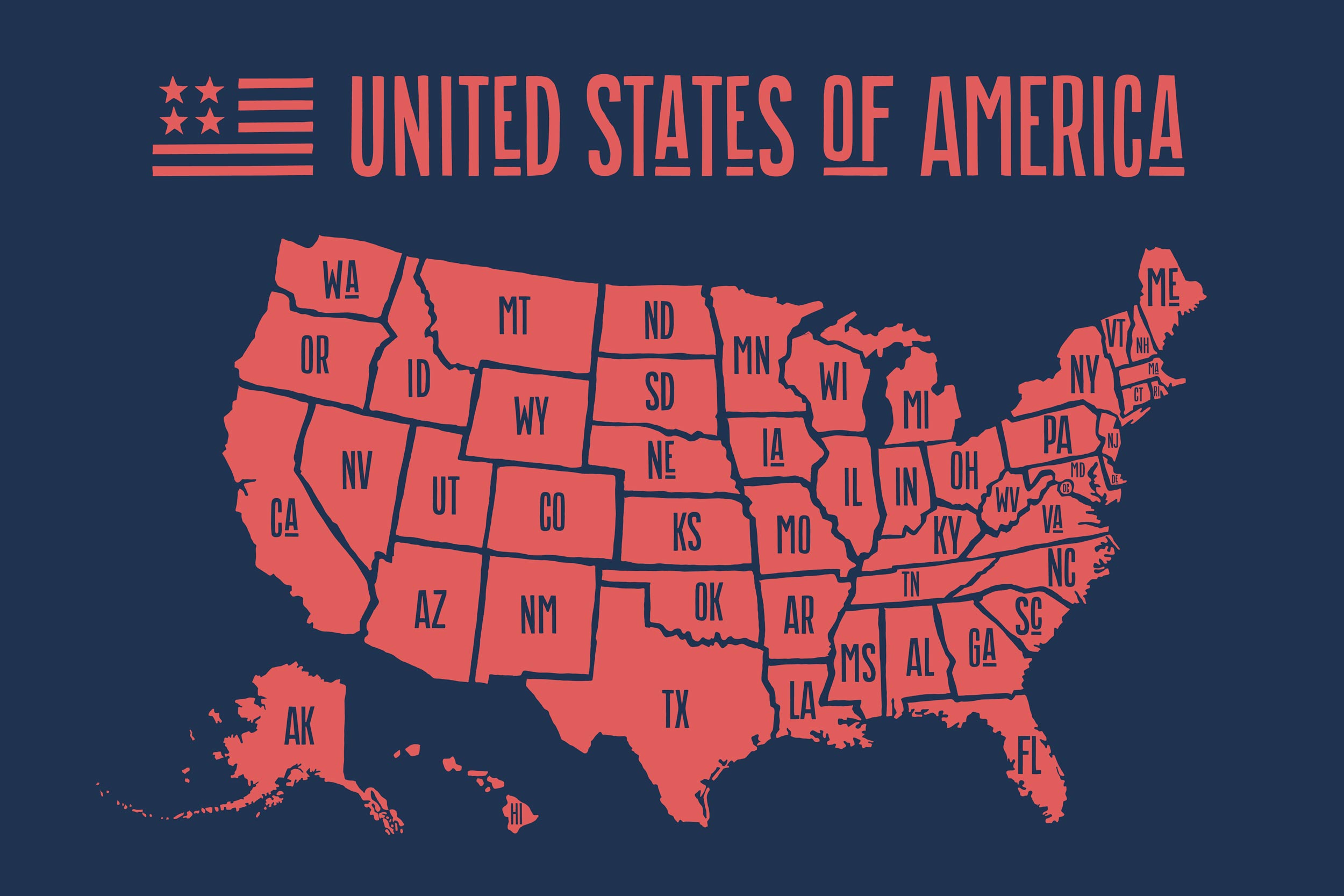
It is important to remember that the Doug LaMalfa Federal Disaster Tax Relief Certainty Act governs federal income tax rules. Individual states do not automatically conform to federal tax changes. If you reside or own property in states with independent disaster regulations, such as California or Oregon, you should check state filing instructions or consult a professional before assuming state tax treatment matches the new federal guidelines.
Securing Financial Continuity After a Disaster
Recovering from a major disaster is a multi-step process that requires careful organization and strategic tax planning. To position yourself for full relief, consider taking the following systematic steps:
- Verify the official federal disaster declaration and confirm the designated FEMA incident period.
- Confirm that your damaged property is located within the defined qualified disaster area.
- Separate all disaster-related casualty losses from any unrelated property damage or theft claims.
- Reduce your total loss calculations by any insurance payouts or expected third-party reimbursements.
- Maintain clear documentation supporting the fair market value of your property both before and after the event.
- Keep all receipts for repairs, reconstruction, temporary housing, and related out-of-pocket expenses.
- Examine settlement agreements to confirm the tax classification of all relief funds received.
- Do not claim tax deductions for expenses that were covered by tax-exempt relief payments.
- Analyze how relief funds impact the adjusted tax basis of your property.
- Consult state-specific tax guidelines to verify whether your state conforms to federal disaster relief provisions.
The Federal Disaster Tax Relief Certain certainty Act provides essential support for individuals facing the aftermath of major disasters and wildfires. However, maximizing these benefits requires meticulous compliance with strict eligibility rules and record-keeping standards. If you have questions about how these legislative changes apply to your specific situation or need assistance amending a prior-year return, please reach out to Hays CPA LLC to schedule a consultation.
Want tax & accounting tips and insights?
Sign up for our newsletter.