Blog
We keep you up to date on the latest tax changes and news in the industry.
Medically Related Home Improvements May Have Tax Benefits
The year 2025 marked a significant milestone in the United States. Why? Because a record number of people reached the age of 65. On average about 11,400 Americans turned 65 every day of the year 2025. This demographic shift, largely driven by the baby boomer generation, has implications for retirement planning, healthcare, and the economy at large.
The U.S. Centers for Disease Control and Prevention (CDC) has stated that falls are the leading cause of injuries among people age 65 and older, and nearly 30% of older adults reported falling at least once in the preceding 12 months. To help minimize falls, and to accommodate age-related infirmities, many people are adding grab bars in showers, modifying stairways, widening hallways to accommodate a wheelchair, and other projects to make the home safer and more accessible for older occupants. If you are planning to make such home improvements, you may be eligible to include the costs as a medical expense for income tax purposes.
Generally, the costs of home improvements are not deductible except to offset home gain when the home is sold. But a medical expense deduction may be claimed when the primary purpose of the home modification is for a medical reason. The tax law says that deductible medical expenses arethose paid for the “diagnosis, cure, mitigation, treatment, or prevention of disease, and the costs for treatments affecting any part or function of the body.”
So, if you are making the modifications because you, your spouse, or a dependent has a medical need for doing so, then the modification expense may be deductible as a medical expense, but only to the extent that it exceeds any resulting increase in the home’s value.
Even though a prescription from a doctor for most medically related home modifications isn’t required, the taxpayer, if questioned by the IRS, needs to be able to demonstrate how the expenditure relates to his or her medical care or that of a spouse or dependent. And having a letter from the individual’s doctor that explains the type of modifications that would be medically beneficial would help to prove a medical need.
Not all improvements result in an increased home value. In fact, some, such as lowering cabinets for an occupant confined to a wheelchair, could decrease the home’s resale value.
The IRS has identified certain improvements that don’t usually increase a home’s value but for which the full cost can be included as a medical expense. These improvements include, but are not limited to, the following items:
Constructing entrance or exit ramps for the home,
Widening doorways at entrances or exits to the home to create space for walkers and wheelchairs.
Widening or otherwise modifying hallways and interior doorways,
Installing railings, support bars, or other modifications,
Lowering or modifying kitchen cabinets and equipment,
Moving or modifying electrical outlets and fixtures,
Installing porch lifts, stairs lifts and other forms of lifts.
Modifying fire alarms, smoke detectors, and other warning systems,
Modifying stairways,
Bathroom modifications including grab bars, lower sinks, and roll-in showers,
Adding handrails or grab bars anywhere,
Modifying hardware on doors,
Modifying areas in front of entrance and exit doorways,
Grading the ground to provide access to the residence, and
Flooring modifications, including non-slip surfaces or leveling floors to prevent falls
Only reasonable costs to accommodate a home to a disabled condition or to an elderly individual are considered medical care costs. Additional costs for personal preferences, such as for architectural or aesthetic reasons, are not medical expenses (but could be additions to the home’s tax basis).
Unfortunately, the total of all medical expenses can be deducted only to the extent that they exceed 7.5% of the taxpayer’s adjusted gross income (AGI) and only if the taxpayer itemizes deductions. With the current high value of the standard deductions, fewer than 15% of taxpayers are expected to currently itemize their deductions. So even if a medically needed home improvement is made and qualifies to be deducted, only a small percentage of taxpayers will end up with a tax benefit because of the expenditure.
All is not lost, though. To the extent that the taxpayer doesn’t claim the expense as an itemized deduction, the improvement costs, including those that might not meet the medically necessary standard, can be added to the home’s purchase cost to determine the home’s tax basis. Thus, when the home is sold, the capital gain from the sale will be lower.
Either to substantiate the currently deductible improvements or with a future home sale in mind, taxpayers should be sure to keep records of the home improvements they make, including the receipts for the costs. Maintaining “before and after” photos is also recommended.
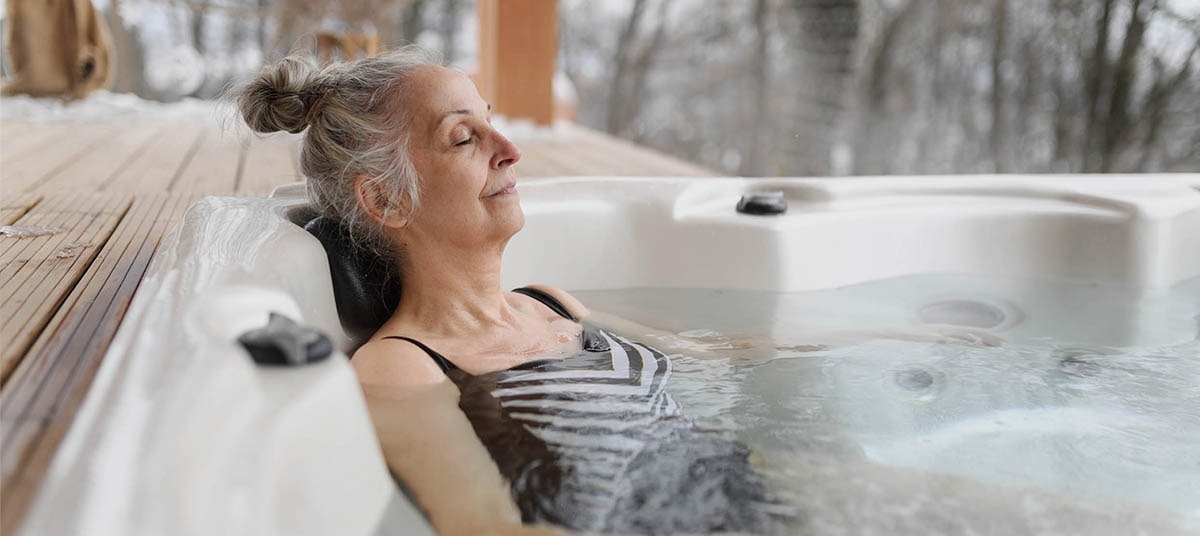
Hot Tub Deduction Issues: When exploring the realm of medically deductible home improvements, it’s nearly impossible to avoid the intriguing discussions around the attempts to classify home hot tubs as medical expenses. Taxpayers frequently explore innovative strategies to lower their tax obligations, and one common tactic involves claiming a hot tub as a medical expense.
These efforts often sit at the intersection of necessity and luxury, challenging both tax laws and personal morality in the quest to alleviate the burdens of medical costs. Understanding what qualifies as a legitimate medical home modification means delving into the creative strategies employed by taxpayers to include items like hot tubs in their deductible expenses, bringing to light broader questions about health-related tax benefits and individual needs.
While it is indeed feasible to claim a hot tub as a deductible medical expense, the process is intricate and must adhere to stringent IRS guidelines. The primary use of the hot tub must be for medical treatment rather than for general wellness or leisure activities. This presents considerable tax challenges and requires clear documentation to satisfy IRS conditions, emphasizing that the primary function is health-related rather than for enjoyment or relaxation purposes. Here are the critical tax considerations and guidelines
Primary Use: The fundamental requirement is demonstrating that the hot tub's main function is for the "diagnosis, cure, mitigation, treatment, or prevention of disease." Expenses that simply enhance general well-being do not qualify for a deduction.
Medical Confirmation: A detailed prescription or recommendation from a licensed physician, specifying the medical condition (such as arthritis, chronic back pain, fibromyalgia) and explaining how hydrotherapy will aid treatment, is crucial for IRS verification. Notes from chiropractors or non-MD practitioners are generally insufficient.
Capital Expense vs. Property Value Enhancement: The IRS regards a hot tub as a capital expense, akin to a home improvement.
If its installation leads to an increase in property value, only the portion of the cost that surpasses this enhancement is deductible. An appraisal might be necessary to determine the exact increase.
If the hot tub does not elevate the home's value (for example, a portable unit), the entire expense might be deductible.
Example: A doctor recommends that his patient with severe arthritis have daily hydrotherapy, and so the individual has a hot tub installed at a cost of $21,000. The individual then hires a certified home appraiser to determine how much the hot tub addition increased the home’s value. The appraiser concludes the increase is $20,000. The individual’s medical deduction for the year the hot tub is installed will be limited to $1,000 ($21,000 - $20,000). The other $20,000 of expenses will increase the home’s basis, meaning that it will add to the home’s cost and will offset the sales price when the home is sold.
Threshold for Deductible Amounts: Medical expenses, including the hot tub, are deductible only if they exceed 7.5% of your Adjusted Gross Income (AGI). Many taxpayers may not surpass this threshold, effectively negating the deduction.
Apportioning for Personal versus Medical Use: If the hot tub is utilized by other family members or enjoyed for reasons unrelated to the medical condition, only the portion of costs that corresponds to its medical use are deductible.
Reasonable Cost: The IRS may closely examine the size and expense of the hot tub. A modest, functional spa is easier to justify than a large, luxurious built-in model with a costly customized deck, which might imply a recreational intent.
Record Keeping and Audits: Thorough documentation is essential. Keep all receipts related to the purchase, installation, and maintenance (such as electricity, chemicals, repairs). In a potential audit, a taxpayer will need to provide medical evidence, the doctor's prescription, and possibly a usage log to demonstrate its primary medical purpose.
It is also noteworthy to mention these same issues would apply to swimming pools, saunas, elevators and the like.
If you have questions related to this deduction and whether you will benefit, tax-wise, from any medically related home modifications, please contact this office.
Sign up for our newsletter.
Each month, we will send you a roundup of our latest blog content covering the tax and accounting tips & insights you need to know.
We care about the protection of your data.