Understanding the New Federal Tips Deduction: A Guide for Service Professionals
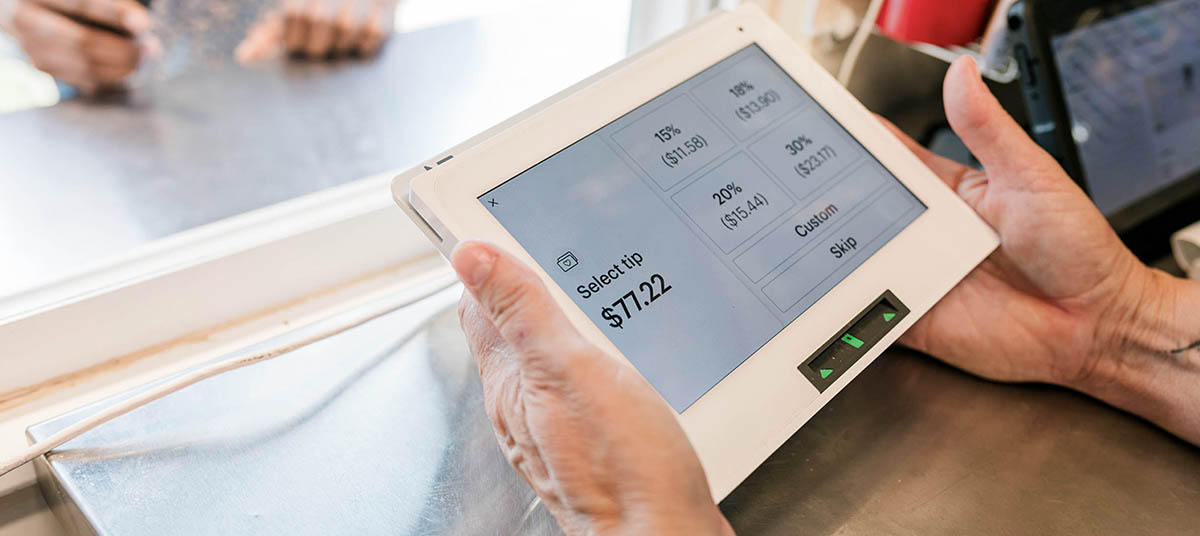
A significant tax shift is arriving for service industry professionals and gig workers. Starting with the 2025 tax year, a temporary federal tax break allows those who earn tips to claim a dedicated deduction. This below-the-line benefit is scheduled to remain in effect through 2028, providing a potential window for substantial tax savings for bartenders, servers, and freelancers alike.
Understanding the mechanics of this deduction is essential for anyone from hair stylists to independent delivery drivers. While the relief is welcome, the IRS has implemented a complex web of eligibility criteria, reporting mandates, and income-based limitations that could catch unprepared taxpayers off guard. This guide explores the final regulations and how they impact your filing obligations.
Navigating the Below-the-Line Deduction Framework
In tax terminology, a below-the-line deduction refers to a benefit that reduces your overall taxable income—and consequently your final tax bill—without lowering your Adjusted Gross Income (AGI). For most taxpayers, this means you can claim this deduction regardless of whether you choose the standard deduction or decide to itemize. It sits as an additional layer of relief designed specifically for the tipped workforce.
Eligibility is strictly tied to your occupation. To qualify, you must work in a role that customarily and regularly received tips as of the end of 2024. The IRS has provided a detailed list known as Treasury Tipped Occupation Codes (TTOCs), which includes roughly 200 examples ranging from hospitality staff to specialized service providers. If you are married and want to claim this benefit, filing a joint return is mandatory, and you must possess a valid work-eligible Social Security number (SSN).

Annual Limits and the Modified AGI Phaseout
Even if you meet the occupational requirements, the deduction is not unlimited. The IRS has set a hard annual cap of $25,000 per taxpayer. This threshold remains the same whether you file as a single individual or jointly with a spouse. For high-earning service professionals, it is important to monitor your Modified Adjusted Gross Income (MAGI), as the benefit begins to vanish once you cross certain income milestones.
The phaseout begins at a MAGI of $150,000 for single filers and $300,000 for those filing jointly. For every $1,000 (or fraction thereof) that your income exceeds these limits, the available deduction is slashed by $100. For example, a single filer with a MAGI of $160,500 faces an $11,000 excess ($10,500 rounded up). This results in a $1,100 reduction in their available deduction. If they were otherwise eligible for the full $25,000, their actual claim would be limited to $23,900.
Defining Qualified Tips in the Digital Age
The final regulations offer a specific definition of qualified tips. Generally, this covers traditional cash, electronic payments via credit or debit cards, gift cards, and even non-cash tokens like casino chips or foreign currency. Voluntary tip pools are also included, provided they are properly reported. Interestingly, managers or supervisors who receive tips for services they personally performed can qualify, though they are generally barred from claiming tips received through mandatory sharing arrangements.
However, the IRS has drawn several firm lines regarding exclusions. Digital assets, such as Bitcoin, stablecoins, or other cryptocurrencies, are explicitly excluded from the definition of qualified tips under IRC §6045(g)(3)(D). Furthermore, any mandatory service charges or auto-gratuities are legally treated as wages, not tips, and therefore do not qualify for the deduction. Tips earned through illegal activities—such as in the federally prohibited cannabis industry—are also ineligible, even if the job description matches a TTOC code.
The Reporting Revolution: 2025 vs. 2026
The biggest hurdle for taxpayers will be the shift in documentation requirements. For the 2025 tax year, the IRS is offering transition relief. Employers are not required to update their reporting forms immediately, and self-employed individuals can rely on their own daily logs and receipts to substantiate their tips. This is a grace period meant to allow workers and businesses to align their bookkeeping practices with the new rules.
Starting in 2026, the rules tighten significantly. To be eligible for the deduction, tips must generally appear on an official information statement, such as a W-2 (using code TP in Box 12), 1099-NEC, or 1099-K. Cash tips that are not reported through these third-party channels will lose their eligibility for the deduction, even though they remain subject to income tax. For employees, self-reporting via Form 4137 remains a secondary option to preserve the deduction, but the emphasis is clearly shifting toward employer-verified reporting.

Strategic Considerations for Self-Employed and Gig Workers
For freelancers and independent contractors in tipped industries, the deduction comes with a net income guardrail. Your deduction cannot exceed your net profit from the business that generated the tips. This net profit is calculated by taking your Schedule C gross receipts (including tips) and subtracting allowable business expenses and specific above-the-line adjustments, such as the deductible portion of self-employment tax and health insurance premiums.
Crucially, this deduction is claimed on Form 1040 Schedule 1-A, rather than directly on Schedule C. It cannot be used to generate or increase a business loss. For gig workers using various platforms, the 2026 requirement for tips to be explicitly listed on a 1099-K or 1099-NEC makes it vital to choose platforms that provide transparent reporting. For example, if a contractor earns $20,000 in net income but has $1,413 in deductible self-employment tax, their tip deduction is limited to $18,587, regardless of the $25,000 statutory cap.
Maximizing Your Tips Deduction Strategy
The introduction of the tips deduction provides a unique opportunity for service professionals to keep more of their hard-earned money, but it requires a high degree of diligence. Because this relief is temporary and subject to strict reporting starting in 2026, establishing a rigorous recordkeeping habit today is the best way to ensure you do not lose out on thousands of dollars in potential savings. Whether you are navigating the transition year of 2025 or preparing for the stricter reporting mandates of 2026, our office is here to help you navigate these final regulations. Schedule a consultation today to review your eligibility and ensure your tax strategy is fully optimized for the years ahead.
Want tax & accounting tips and insights?
Sign up for our newsletter! Each month, we will send you a roundup of our latest blog content covering the tax and accounting tips & insights you need to know.